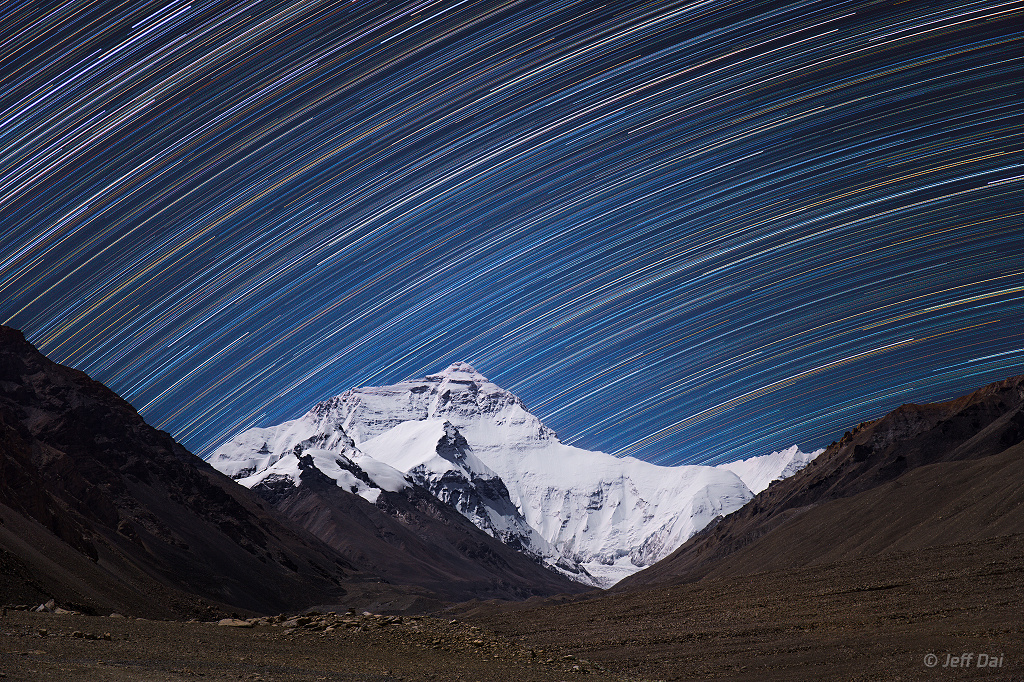
Mount Everest Star Trails


The highest peak on planet Earth is framed in this mountain and night skyscape. On September 30, the digital stack of 240 sequential exposures made with a camera fixed to a tripod at an Everest Base Camp captured the sheer north face of the Himalayan mountain and foreground illuminated by bright moonlight. Taken over 1.5 hours, the sequence also recorded colorful star trails. Reflecting the planet's daily rotation on its axis, their motion is along gentle concentric arcs centered on the south celestial pole, a point well below the rugged horizon. The color of the trails actually indicates the temperatures of the stars. Blueish hues are from hotter stars, and yellow to reddish hues are from stars cooler than the Sun. via NASA https://ift.tt/2RmZ1tf

A 'BrainStorm Trooper' Inquires About NASA Exploration


A Nova Labs Robotics "BrainStorm Troopers" team member from Reston, Virginia, asks a question during an Commercial Lunar Payload Services (CLPS) announcement. via NASA https://ift.tt/2DRLJ44

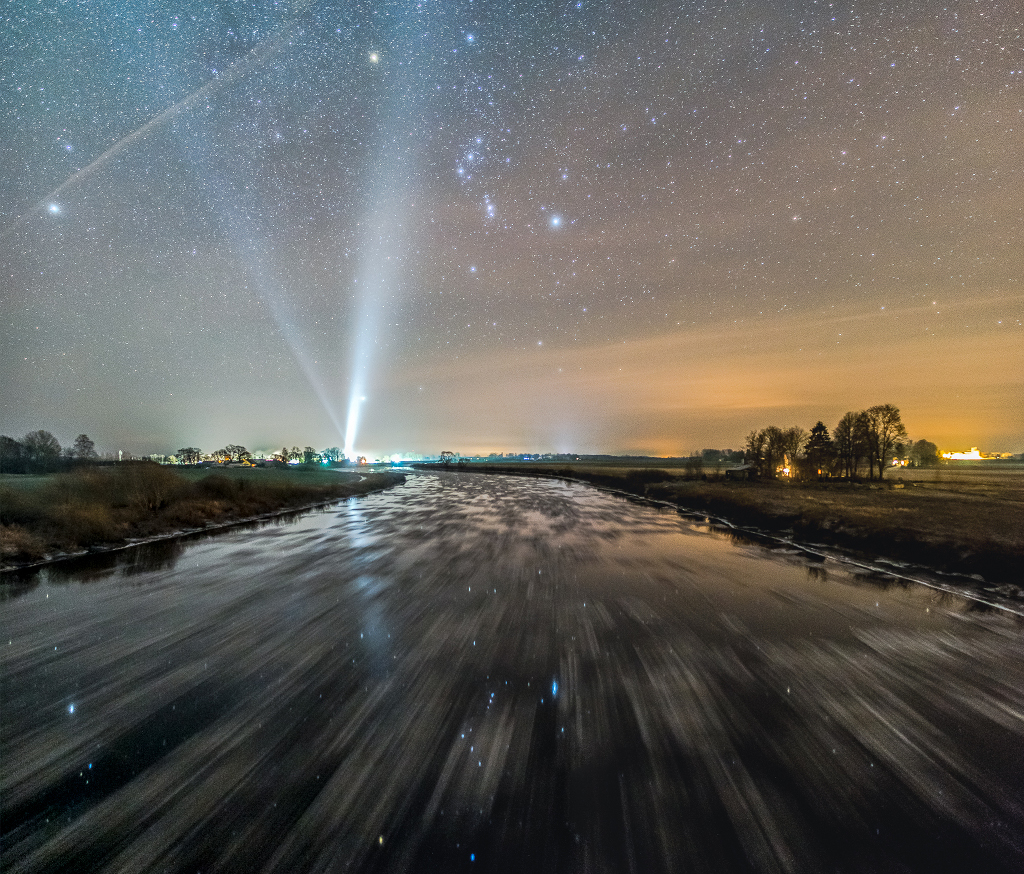
A Cold River to Orion


Ice is forming on the river Lielupe as it flows through the landscape in this winter's night scene. Even in motion the frigid water still reflects a starry sky, though. The well planned, Orion-centered panorama looks toward the south, taken in three exposures from a bridge near the village of Stalgene, Latvia, planet Earth. Drifting pancakes of ice leave streaks in the long exposures, while familiar stars of Orion and the northern winter night appear above and below the horizon. Village lights along the horizon include skyward beams from the local community church. This image was a first place winner in the 2018 StarSpace astrophotography competition. via NASA https://ift.tt/2Q0HSsA

Hubble Explores the Coma Cluster's More Than 1,000 Galaxies


This Hubble Space Telescope mosaic is of a portion of the immense Coma cluster of over 1,000 galaxies, located 300 million light-years from Earth. via NASA https://ift.tt/2FPwtHp