International Space Station Transits the Full Moon


The International Space Station, with a crew of six onboard, is seen in silhouette as it transits the moon at roughly five miles per second on Tuesday, Jan. 30, 2018. via NASA http://ift.tt/2DRQEDi

The First Explorer


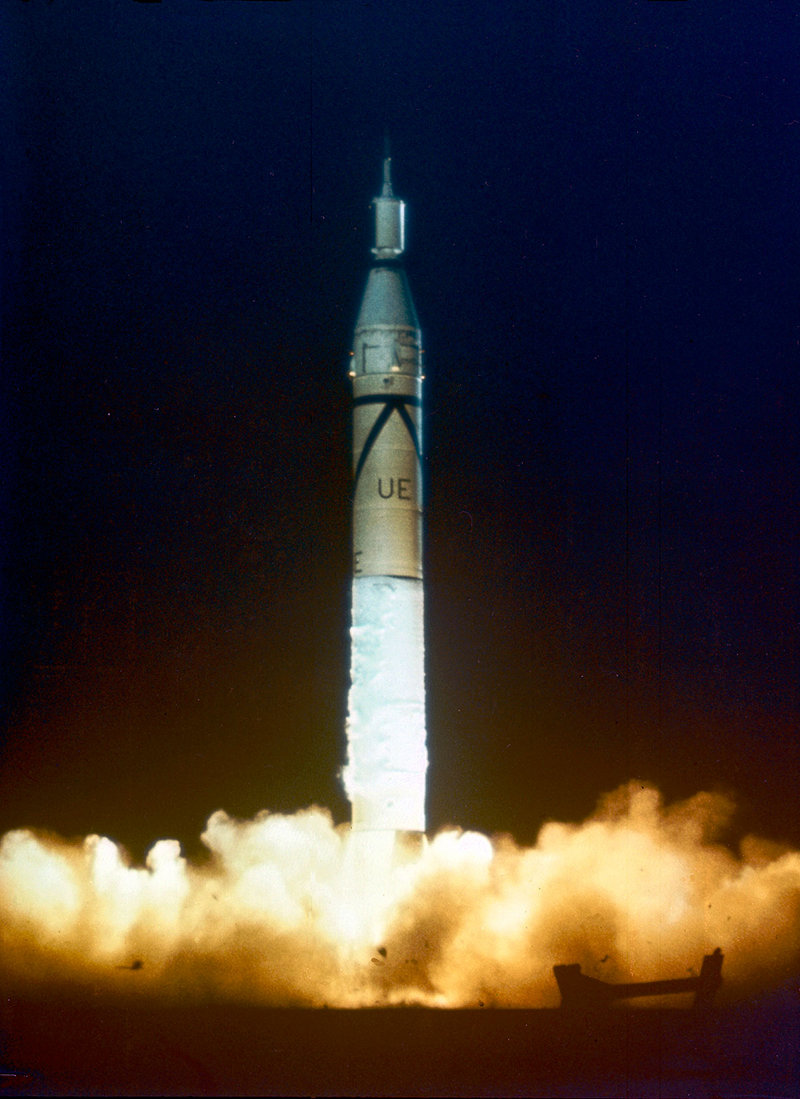
Sixty years ago, on January 31, 1958, the First Explorer was successfully launched by the Army Ballistic Missile Agency on a Jupiter-C rocket. Inaugurating the era of space exploration for the United States, Explorer I was a thirty pound satellite that carried instruments to measure temperatures, and micrometeorite impacts, along with an experiment designed by James A. Van Allen to measure the density of electrons and ions in space. The measurements made by Van Allen's experiment led to an unexpected and then startling discovery of two earth-encircling belts of high energy electrons and ions trapped in the magnetosphere. Now known as the Van Allen Radiation belts, the regions are located in the inner magnetosphere, beyond low Earth orbit. Explorer I ceased transmitting on February 28, 1958, but remained in orbit until March of 1970. via NASA http://ift.tt/2Gxjab3

Saying Goodnight


Astronaut Mark Vande Hei took this image of the eastern U.S. and Canada at night, writing, "Good night from @Space_Station. DC, NY, Toronto, Cleveland, and surrounding areas!" via NASA http://ift.tt/2BDVLRC

Venus at Night in Infrared from Akatsuki


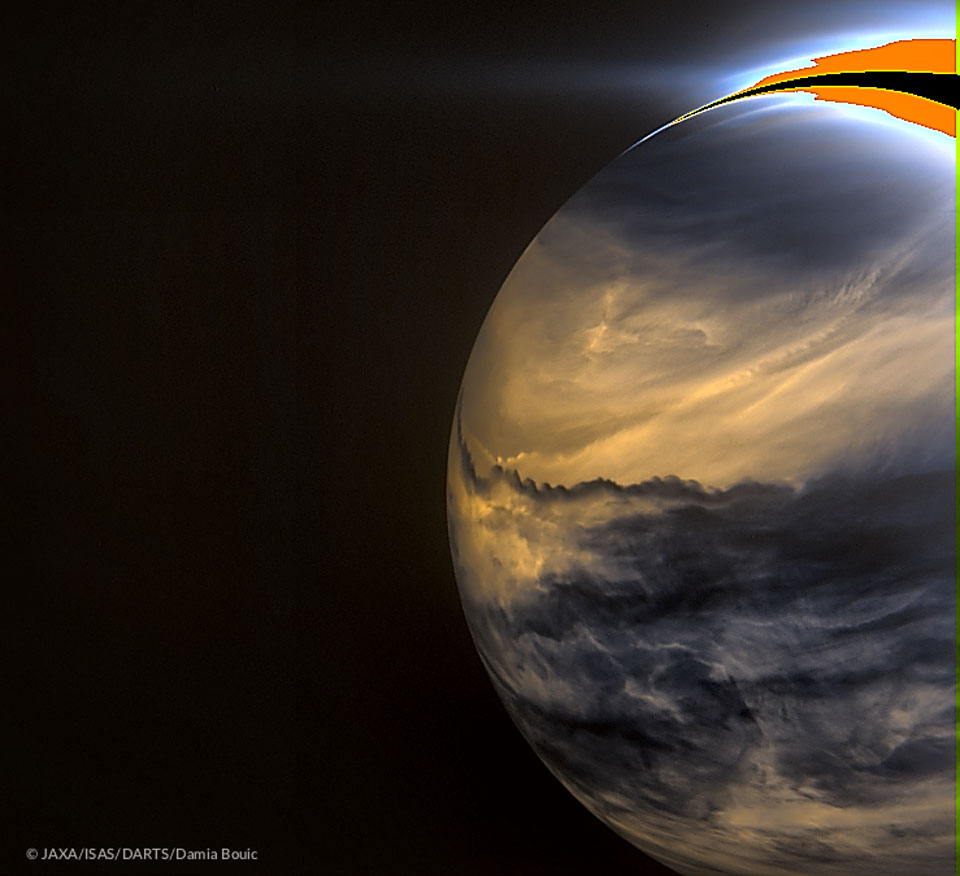
Why is Venus so different from Earth? To help find out, Japan launched the robotic Akatsuki spacecraft which entered orbit around Venus late in 2015 after an unplanned five-year adventure around the inner Solar System. Even though Akatsuki was past its original planned lifetime, the spacecraft and instruments were operating so well that much of its original mission was reinstated. Also known as the Venus Climate Orbiter, Akatsuki's instruments investigated unknowns about Earth's sister planet, including whether volcanoes are still active, whether lightning occurs in the dense atmosphere, and why wind speeds greatly exceed the planet's rotation speed. In the featured image taken by Akatsuki's IR2 camera, Venus's night side shows a jagged-edged equatorial band of high dark clouds absorbing infrared light from hotter layers deeper in Venus' atmosphere. The bright orange and black stripe on the upper right is a false digital artifact that covers part of the much brighter day side of Venus. Analyses of Akatsuki images and data has shown that Venus has equatorial jet similar to Earth's jet stream. via NASA http://ift.tt/2DKlFVr