Lunar Farside


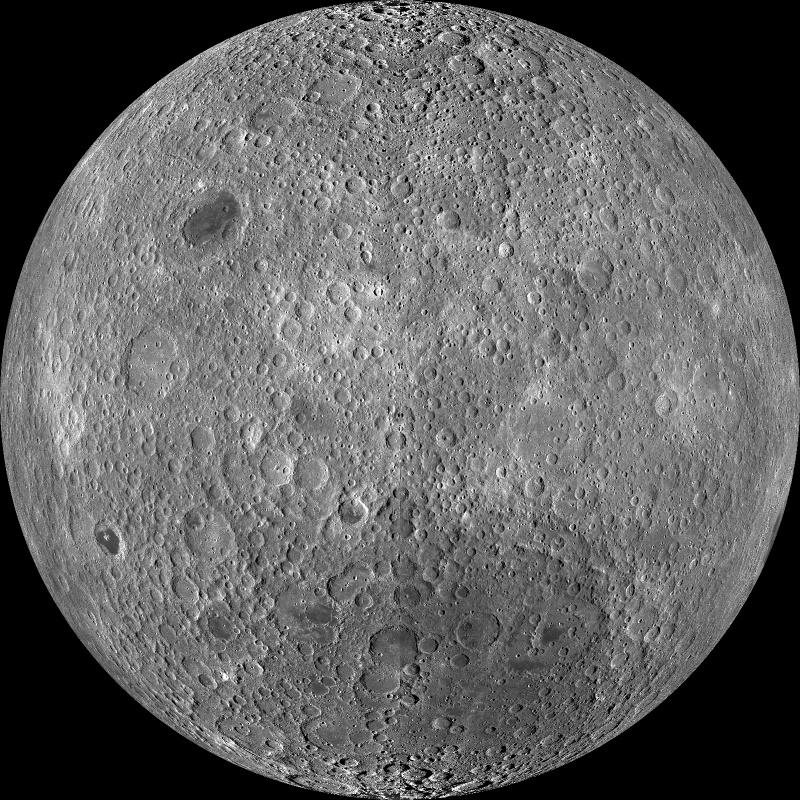
Tidally locked in synchronous rotation, the Moon always presents its familiar nearside to denizens of planet Earth. From lunar orbit, the Moon's farside can become familiar, though. In fact this sharp picture, a mosaic from the Lunar Reconnaissance Orbiter's wide angle camera, is centered on the lunar farside. Part of a global mosaic of over 15,000 images acquired between November 2009 and February 2011, the highest resolution version shows features at a scale of 100 meters per pixel. Surprisingly, the rough and battered surface of the farside looks very different from the nearside covered with smooth dark lunar maria. The likely explanation is that the farside crust is thicker, making it harder for molten material from the interior to flow to the surface and form the smooth maria. via NASA http://ift.tt/2iN0CuU

Small Satellite Deployed From the Space Station


A satellite is ejected from the Japan Aerospace Exploration Agency (JAXA) Small Satellite Orbital Deployer on the International Space Station on Dec. 19, 2016. The satellite is actually two small satellites that, once at a safe distance from the station, separated from each other, but were still connected by a 100-meter-long Kevlar tether. via NASA http://ift.tt/2hU5LNj

Hubble Gazes at a Cosmic Megamaser


This galaxy acts as an astronomical laser, beaming out microwave emission rather than visible light. via NASA http://ift.tt/2ihOnTW

Curiosity Surveys Lower Mount Sharp on Mars


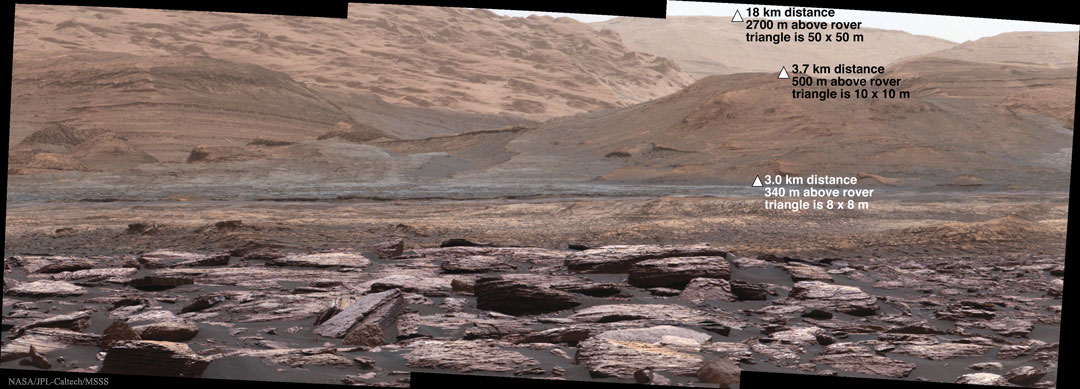
If you could stand on Mars -- what might you see? If you were the Curiosity rover, then just last month you would have contemplated the featured image -- a breathtaking panorama of the lower portion of Mount Sharp. The colors have been adjusted to mimic lighting familiar to Earthlings. Surveyed here was a rocky plain before increasingly high rolling hills. The rounded hills in the middle distance, called the Sulfate Unit, are Curiosity's highest currently planned destination. One reason these hills are interesting is because sulfates are an energy source for some micro-organisms. The immediate path forward, though, was toward the southeast on the left part of the image. via NASA http://ift.tt/2hosYXb