Oct. 4, 1957 - Sputnik, the Dawn of the Space Age


History changed on Oct. 4, 1957, when the Soviet Union successfully launched Sputnik from the Baikonur Cosmodrome in Kazakhstan. The world's first artificial satellite was about the size of a beach ball, about 23 inches in diameter and weighing less than 190 pounds. via NASA http://ift.tt/2hNf1Yq

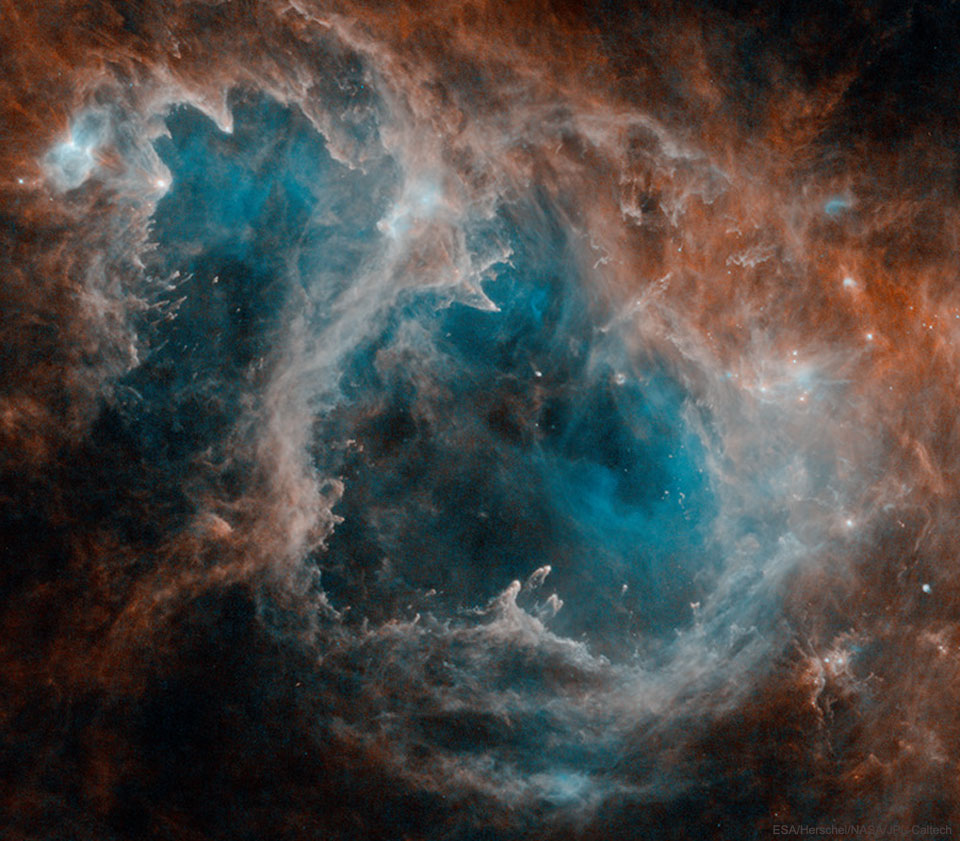
The Soul Nebula in Infrared from Herschel


Stars are forming in the Soul of the Queen of Aethopia. More specifically, a large star forming region called the Soul Nebula can be found in the direction of the constellation Cassiopeia, who Greek mythology credits as the vain wife of a King who long ago ruled lands surrounding the upper Nile river. The Soul Nebula houses several open clusters of stars, a large radio source known as W5, and huge evacuated bubbles formed by the winds of young massive stars. Located about 6,500 light years away, the Soul Nebula spans about 100 light years and is usually imaged next to its celestial neighbor the Heart Nebula (IC 1805). The featured image, impressively detailed, was taken last month in several bands of infrared light by the orbiting Herschel Space Observatory. via NASA http://ift.tt/2xMXJBn

It's Planting Season on the International Space Station


It's planting season on the International Space Station! NASA astronaut Joe Acaba prepared the Veggie facility for three different kinds of lettuce seeds as part of the VEG-03-D investigation. This is the first time seeds from multiple kinds of plants are being grown in the facility all at the same time. via NASA http://ift.tt/2yVNLLC

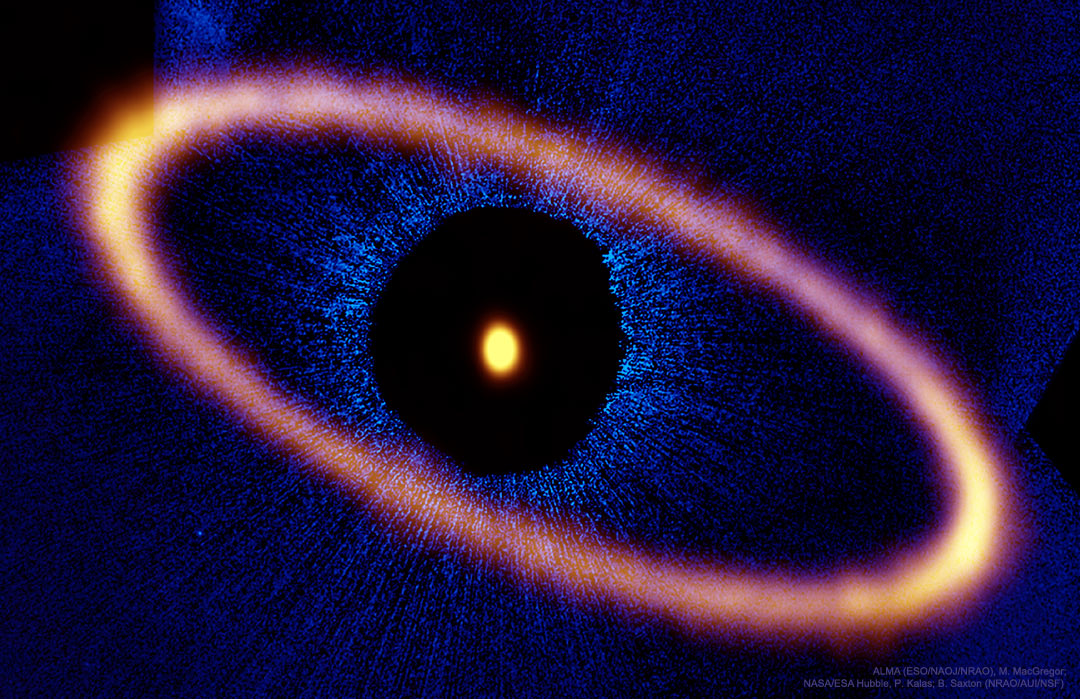
Ice Ring around Nearby Star Fomalhaut


Why is there a large ice ring around Fomalhaut? This interesting star -- easily visible in the night sky -- lies only about 25 light-years away and is known to be orbited by at least one planet, Dagon, as well as several inner dust disks. More intriguing, perhaps, is an outer ring, first discovered about 20 years ago, that has an unusually sharp inner boundary. The featured recent image by the Atacama Large Millimeter Array (ALMA) shows this outer ring with complete and unprecedented detail -- in pink -- superposed on a Hubble image of the Fomalhaut system in blue. A leading theory holds that this ring resulted from numerous violent collisions involving icy comets and planetesimals, the component objects of planets, while the ring boundaries are caused by the gravity of yet unseen planets. If correct, any interior planets in the Fomalhaut system are likely being continually pelted by large meteors and comets -- an onslaught last seen in our own planetary system four billion years ago in an episode called the Late Heavy Bombardment. via NASA http://ift.tt/2kgOZO3